Introduction
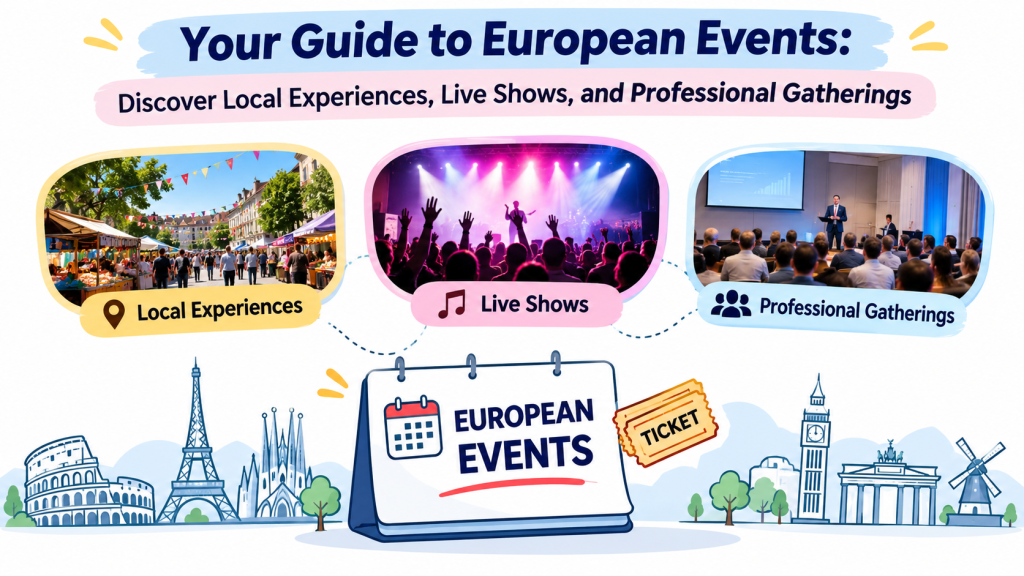
Europe offers many ways to enjoy your free time. Each destination has its own events, music scene, cultural activities, and professional communities.
You might discover a live band in Berlin. You could join an art workshop in Paris. A technology conference might also bring new ideas to your next business trip.
These experiences help people connect with places and communities. They also give local organizers a chance to share their activities with wider audiences.
Finding suitable events can still take time. People need to compare dates, locations, ticket categories, and event schedules.
MyEventsNow EU brings event discovery, online ticket booking, and event management together. It connects attendees, organizers, venues, and businesses across Europe.
This guide explains how to explore European events, review ticket information, and manage event listings. It also shares practical advice for attendees and organizers.
1. Why European Events Matter to Travelers and Local Communities
Events add more activities to a city’s everyday life. They bring people together through music, education, culture, business, and entertainment.
For travelers, events offer another way to experience a destination. A local festival can introduce regional traditions. A concert can create a memorable evening. A workshop can help visitors learn a new skill.
Local residents also benefit from event discovery. They can find activities outside their usual routines and connect with people who share their interests.
Businesses and organizers gain another opportunity. They can present their activities and reach people who want to attend events.
Different people have different event goals
| Audience | What they may want to explore |
|---|---|
| Tourists | Festivals, concerts, and local activities |
| Students | Educational seminars and workshops |
| Professionals | Conferences and networking events |
| Music fans | Live performances and music festivals |
| Business owners | Industry meetings and professional gatherings |
| Families | Community events and entertainment |
| Creative learners | Art, design, and photography workshops |
A useful event marketplace helps people explore these choices. Clear listings also help them decide which activities suit their plans.
2. MyEventsNow EU: A Marketplace for Event Discovery and Management
MyEventsNow EU is a European event discovery, online ticket booking, and event management marketplace.
It connects people who organize events with people who want to attend them. It also supports connections with venues and businesses.
What attendees can do
Attendees can explore event listings across different categories. They can review event descriptions and available ticket information.
They may discover activities such as:
- Live music performances
- Cultural festivals
- Business conferences
- Technology gatherings
- Educational seminars
- Creative workshops
- Professional networking events
- Community activities
What organizers can do
Organizers can create event listings and share important information. They can configure ticket categories and manage registration details.
They can also review booking records and update event information.
Who can use the marketplace?
MyEventsNow EU connects different participants in the event community.
These include event agencies, venues, businesses, training providers, community organizations, and attendees.
Each group has different needs. The marketplace brings their event-related activities into one environment.
The exact booking options and organizer capabilities depend on the event and its setup.
3. Online Event Ticket Booking Europe: A Better Way to Prepare
Online Event Ticket Booking Europe helps people explore event information before making a booking decision.
Attendees can research an activity and review the details at their own pace. This can make event planning easier, especially during a busy trip.
Start with the event category
Choose the type of activity you want to attend. You may prefer a concert, festival, conference, or workshop.
Compare event dates
Check the event date and starting time. Make sure they fit your travel or personal schedule.
Review the venue
Check the venue name and location. Consider transport options and the distance from your accommodation.
Understand ticket categories
Read the description of each ticket option. Different categories may offer different access or seating arrangements.
Check event conditions
Review entry requirements and cancellation terms. These conditions can differ between organizers.
Look for updates
Check the event information again before attending. Organizers may change the venue or schedule.
MyEventsNow EU supports event discovery and online ticket booking across Europe. Attendees should always follow the details and terms shown on each event listing.
4. Explore Upcoming Events in Europe by Interest
Upcoming Events in Europe cover many subjects and activities. People can explore entertainment, culture, education, technology, and professional gatherings.
Here are some popular event categories to consider.
Music and live entertainment
Music events may include concerts, DJ performances, and outdoor festivals. These activities can suit visitors who want to enjoy local or international performers.
Cultural celebrations
Cultural events help people explore traditions and creative communities. They may include public celebrations, art programs, and special performances.
Technology and innovation
Technology gatherings can focus on software, digital products, and innovation. They may attract developers, founders, students, and business teams.
Business and networking
Professional events help people discuss industry topics. They can also create opportunities to meet others from similar fields.
Learning and education
Seminars and workshops offer ways to explore new subjects. Some events focus on professional development, while others support creative learning.
Community activities
Community gatherings help local people connect. They may include social activities, local programs, and group events.
| Event type | What attendees can expect |
|---|---|
| Concerts | Live music and performances |
| Festivals | Music, culture, and local celebrations |
| Conferences | Industry discussions and professional learning |
| Workshops | Practical activities and skill development |
| Seminars | Talks and focused learning sessions |
| Meetups | Networking and shared interests |
| Entertainment shows | Live performances and special activities |
A simple way to choose
First, decide what you want from the experience. Then select a city and suitable date.
Compare the event descriptions and schedules. Review the venue and ticket information before making your choice.
5. Berlin: Explore Music, Technology, and Creative Events
Berlin attracts people who enjoy music, technology, professional discussions, and creative activities.
People searching for Events in Berlin can explore different types of experiences.
Concerts and live performances
Music lovers can look for live bands, electronic music events, DJ shows, and special performances.
Check the performer and venue before choosing a concert. Review the event time and ticket categories as well.
Technology gatherings
Technology conferences can bring together developers, founders, researchers, and business teams.
Topics may include software, digital products, artificial intelligence, and innovation.
Business meetups
Professional meetups help people connect with others from similar industries. They may focus on marketing, entrepreneurship, design, and business growth.
Creative workshops
Creative sessions can help visitors explore practical skills. Activities may include photography, art, design, and other subjects.
Planning your Berlin visit
Berlin has many venues across different areas. Check the complete address before booking.
Compare the event schedule with your other activities. Review entry conditions and updates before attending.
6. Paris: Discover Culture, Music, and Professional Activities
Paris offers experiences for visitors who enjoy art, culture, entertainment, and business activities.
People searching for Events in Paris can explore several event categories.
Cultural festivals
Cultural festivals help visitors learn about local traditions and creative communities. They may include performances, exhibitions, and public celebrations.
Music and entertainment
Paris offers opportunities to explore concerts and live entertainment. Attendees can compare performers, dates, and venues through event listings.
Business conferences
Professional events may cover entrepreneurship, technology, digital marketing, innovation, and industry development.
These gatherings can help attendees explore business ideas and meet other professionals.
Educational seminars
Seminars provide opportunities to learn about specific topics. Some focus on business skills, while others explore education and creative subjects.
Creative workshops
Workshops can offer practical activities for people who enjoy learning new skills. Topics may include art, photography, and design.
Tips for choosing a Paris event
Check the venue address before booking. Consider travel time between the event and your other plans.
Review the event description and schedule. Make sure the activity matches your interests.
7. Concert Tickets Europe: Make Live Music Part of Your Plans
Europe offers music experiences across different cities and destinations. Concert Tickets Europe searches can help music fans discover available performances.
You may explore:
- Live band concerts
- Solo artist performances
- Electronic music events
- DJ performances
- Outdoor music festivals
- Classical music shows
- Local music celebrations
- Special entertainment events
What should music fans check?
Artist information: Confirm the performer or group.
Event date: Make sure the date suits your schedule.
Venue location: Check the address and transport options.
Ticket category: Understand what each ticket option includes.
Entry conditions: Review age limits and venue rules.
Cancellation terms: Read the organizer’s rules for changes.
Event updates: Check the latest information before attending.
A concert title alone does not explain every detail. Read the full listing before selecting tickets.
8. Business Conferences in Europe: Find Opportunities to Learn and Connect
Business Conferences in Europe bring professionals together around shared industry interests.
These events may help attendees explore new ideas and understand changes in their fields. They can also create opportunities for professional networking.
| Conference subject | Possible discussion areas | Suitable audience |
|---|---|---|
| Technology | Software, digital products, and innovation | Technology professionals |
| Entrepreneurship | Startups and business planning | Founders and business owners |
| Digital marketing | Online campaigns and customer reach | Marketing teams |
| Leadership | Management and team development | Managers |
| Industry development | Market changes and business practices | Industry professionals |
| Networking | Professional relationships and collaboration | Business communities |
Benefits for different professionals
- Founders can explore business planning and startup ideas.
- Marketing teams can discuss digital campaigns and customer needs.
- Technology professionals can learn about industry developments.
- Managers can explore leadership and team topics.
- Students can learn about professional subjects and career options.
How to select a conference
Review the agenda and speaker information. Check whether the subjects match your goals.
Also confirm the event language, date, venue, and ticket conditions.
9. Event Ticketing Platform Europe: Important Points for Comparison
An Event Ticketing Platform Europe helps people discover events and review ticket information.
It also gives organizers a place to present event details and manage ticket-related activities.
When comparing platforms, consider the following areas.
| Area | What to examine |
|---|---|
| Event discovery | Categories and listing information |
| Ticket details | Available options and ticket descriptions |
| Event information | Dates, schedules, and activity details |
| Venue details | Location and venue information |
| Organizer tools | Event creation and listing updates |
| Registration | Attendee sign-up information |
| Booking records | Relevant registration and booking details |
| Event communication | Ways to share important changes |
Why these areas matter
Attendees need clear details before they make a booking decision. They should understand the event, its location, and ticket conditions.
Organizers need to keep their listings accurate. They should review ticket categories, schedules, and registration information.
MyEventsNow EU combines event discovery, ticket booking, and event management in one marketplace. The exact options can differ by event.
10. Event Registration Platform Europe: Organize Attendee Information
An Event Registration Platform Europe helps event teams manage attendee sign-ups and related booking information.
Organizers need a clear process to prepare for an event. They should plan registration activities before publishing their listings.
Create an event listing
Add the event name, description, date, time, and venue.
Prepare ticket categories
Create ticket options that suit the event. Explain what each category includes.
Set registration details
Decide which participant information the event requires. Keep the process simple and relevant.
Review attendee records
Check incoming registrations and booking details. Organize the information for event preparation.
Monitor ticket availability
Review the available ticket categories. Update the information when availability changes.
Share event updates
Tell attendees about important schedule or venue changes. Use clear information to avoid confusion.
MyEventsNow EU supports organizers with event listings and registration-related activities. Organizers should also review their records and manage their own event terms.
11. List Your Event Online: Help People Understand Your Activity
Organizers need to explain their events clearly. A useful listing can help potential attendees decide whether an activity suits them.
When you List Your Event Online, prepare the important information first.
Choose a clear title
Use a short and accurate name. The title should explain the main event activity.
Write a useful description
Explain the event purpose and main activities. Mention who may find the event useful or interesting.
Add venue information
Share the correct venue name and location. Check the address before publishing.
Provide the event schedule
Add the date, start time, and session details. Keep the schedule accurate.
Explain ticket options
Describe the available ticket categories. Include correct prices and relevant conditions.
Share organizer details
Provide relevant information about the event organizer. This helps attendees understand who manages the activity.
Review the listing
Check every detail before publishing. Correct spelling, dates, prices, and venue information.
A clear listing gives attendees useful information. It also helps organizers explain their event to the right audience.
12. Sell Event Tickets Online: Build a Clear Ticket Management Process
Organizers need to plan ticket information before promoting an event.
When they Sell Event Tickets Online, they should manage ticket categories, prices, registration details, and communication carefully.
Prepare ticket categories
Choose options that match the event format. Explain the differences between each category.
Display accurate prices
Show the correct prices and any additional charges. Keep the information consistent.
Review booking records
Check registration activity regularly. This helps organizers understand booking progress.
Monitor availability
Keep ticket information current. Update the listing when ticket options change.
Communicate with attendees
Share important updates about the event. Explain changes to schedules, venues, or other key details.
Promote the event
Choose suitable channels to reach the target audience. Share accurate descriptions and relevant information.
Ticket sales depend on audience interest, event quality, pricing, timing, and promotion. Organizers should not expect guaranteed sales or attendance.
13. Eight Common Event Booking Mistakes and Their Solutions
People can avoid many booking problems with careful planning. These eight mistakes often create confusion for attendees.
Mistake 1: Booking without reading the event description
The event title may sound interesting, but the activities may not match your expectations.
Solution: Read the full description and review the program before choosing tickets.
Mistake 2: Selecting an unsuitable date
A date conflict can affect your travel, work, or personal schedule.
Solution: Confirm the date and starting time before booking.
Mistake 3: Ignoring the venue location
A distant venue may create travel problems.
Solution: Check the address and transport options before confirming your plans.
Mistake 4: Choosing the wrong ticket type
Ticket categories may offer different access or seating arrangements.
Solution: Compare the ticket descriptions carefully.
Mistake 5: Missing entry requirements
Some events may have age limits or special venue conditions.
Solution: Review the entry rules before booking.
Mistake 6: Overlooking cancellation terms
Different organizers may follow different cancellation and change rules.
Solution: Read the event’s terms before confirming your selection.
Mistake 7: Waiting until the last moment
Some events may have limited ticket availability.
Solution: Explore suitable events early and check the current ticket options.
Mistake 8: Forgetting to check event updates
Organizers may change the event schedule or venue.
Solution: Review the latest event information before leaving.
14. Organizer Planning Checklist: Prepare Before the Event Goes Live
Event organizers need to review important details before publishing their listings. They should also check their information as the event date approaches.
| Task | What to review |
|---|---|
| Event title | Clear and accurate name |
| Event description | Purpose, activities, and audience |
| Venue | Correct venue name and address |
| Schedule | Dates, times, and sessions |
| Ticket categories | Available options and prices |
| Registration | Sign-up process and required details |
| Attendee information | Relevant participant records |
| Booking records | Registration and booking activity |
| Availability | Current ticket information |
| Communication | Updates for attendees |
| Promotion | Accurate information for the target audience |
Keep every detail accurate
Check dates, venue information, and prices before publishing. Use consistent details across your event materials.
Update information when plans change
Review your listing whenever the schedule or venue changes. Share important updates with attendees.
Prepare your team
Make sure the event team understands the schedule and registration process. Give them the information they need to manage their tasks.
15. Practical Examples: How Attendees and Organizers Can Use the Marketplace
The following examples are fictional. They show how different people may use an event marketplace.
Example 1: A traveler planning a music evening in Berlin
Arjun plans a weekend visit to Berlin. He wants to attend a live music event during his stay.
He explores concert listings and compares the available dates. He checks the performer, venue, and ticket categories.
He chooses an event that fits his schedule. This helps him add a music experience to his trip.
Example 2: A professional searching for a Paris conference
Meera works in digital marketing. She plans a visit to Paris and wants to explore professional learning opportunities.
She reviews business conference listings and compares their topics. She checks the agenda, venue, and ticket information.
She chooses a conference that matches her interests. This helps her combine travel with professional learning.
Example 3: A community organization promoting a local event
A community organization plans a cultural gathering. The team wants to share the event with residents and visitors.
It prepares the title, description, schedule, and venue details. It also reviews ticket categories and registration information.
The team creates a listing through an event marketplace. It continues to review booking records and update the event details.
Example 4: A training provider managing a workshop
A training provider plans a workshop for business professionals. The team needs to share the session details and manage registrations.
It prepares the event description and schedule. It also creates ticket categories and registration information.
The organizers review participant records before the workshop. This helps them prepare for the session.
Frequently Asked Questions
1. What is MyEventsNow EU?
MyEventsNow EU is a European event discovery, online ticket booking, and event management marketplace. It connects event organizers, venues, businesses, and attendees. People can explore event listings and review ticket information. Organizers can create listings and manage event details, ticket categories, registration information, and booking records.
2. How can I discover Upcoming Events in Europe?
Choose a city or country that interests you. Then explore categories such as concerts, festivals, conferences, workshops, and cultural activities. Review each listing for its date, venue, schedule, and ticket details. MyEventsNow EU helps people explore different event opportunities across European destinations.
3. What types of Events in Berlin can I attend?
Berlin offers music, technology, business, and creative activities. You may explore live concerts, technology conferences, professional meetups, workshops, and entertainment shows. Check the individual event listing for current information. Review the date, venue, ticket categories, and entry conditions before booking.
4. Which Events in Paris can visitors explore?
Paris offers cultural festivals, live music, business conferences, educational seminars, and creative workshops. Visitors can choose activities that match their interests and schedules. Review the event description, venue, date, and ticket details before making a booking decision.
5. How can I find Concert Tickets Europe?
Online event marketplaces can help music fans explore concerts across European destinations. Compare performers, dates, venues, and ticket categories before choosing an event. Review entry requirements and cancellation terms. Ticket options and availability depend on each event and organizer.
6. What are the benefits of Business Conferences in Europe?
Business conferences help professionals explore industry topics and connect with other people. They may cover technology, entrepreneurship, digital marketing, innovation, and business development. Attendees should review the agenda and speakers before booking. This helps them choose conferences that match their professional goals.
7. What does an Event Ticketing Platform Europe provide?
An Event Ticketing Platform Europe helps attendees discover events and review ticket choices. It should present useful information about event dates, venues, and ticket categories. Organizers also need options to create listings and manage ticket details. Features and booking options can vary between platforms.
8. How can an Event Registration Platform Europe help organizers?
An Event Registration Platform Europe helps organizers manage attendee sign-ups and booking records. It can support registration workflows, participant details, and ticket categories. Organizers can review registration activity and prepare for their events. They should also keep event information accurate and share important updates.
9. How do I List Your Event Online?
Prepare a clear event title, description, date, venue, and schedule. Add ticket categories and registration information. Then create a listing through a suitable event marketplace. Review all details before publishing. Accurate information helps potential attendees understand your event.
10. Can organizers Sell Event Tickets Online for festivals?
Yes, organizers can use suitable event marketplaces to present festivals and manage ticket-related activities. They should explain the festival schedule, venue, ticket categories, and entry conditions. They should also review booking records and attendee information. Actual ticket sales depend on demand, pricing, audience interest, and promotion.
11. What should I check before booking an event?
Review the event name, date, time, venue, ticket category, and price. Check entry requirements and cancellation terms. Also review the schedule and organizer updates. These details help you understand the event conditions and make a more informed booking choice.
12. Who can use MyEventsNow EU?
Event agencies, venues, businesses, training providers, and community organizations can use event marketplaces to present their activities. MyEventsNow EU connects these groups with people who want to discover events. Organizers should prepare accurate listings and manage their own registration information and event terms.
Final Thoughts
A European visit can become more memorable when you explore local events. Concerts, festivals, conferences, and workshops offer different ways to enjoy each destination. Attendees should review event dates, venues, ticket categories, and entry rules before booking. Organizers should create clear listings and manage registration details with care. MyEventsNow EU connects attendees, organizers, venues, and businesses through event discovery, online ticket booking, and event management. It brings different event opportunities into one marketplace. Start with your interests, explore suitable listings, and choose activities that fit your plans.
